Home-made terrine of foie gras
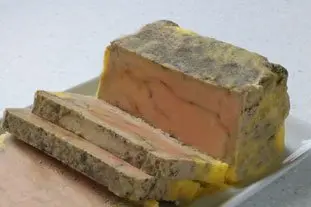
Preparing your own home-made foie gras from raw is immensively satisfying: good quality liver and a simply amazing flavour – much better than anything you can buy.
This recipe is a bit tricky, but quite within everyone's grasp, as long as you follow the 3 most delicate stages carefully. These are, in order: de-veining the liver, seasoning and cooking.
As usual, I have explained every stage of the recipe in full, with photos to help you.
This recipe is a bit tricky, but quite within everyone's grasp, as long as you follow the 3 most delicate stages carefully. These are, in order: de-veining the liver, seasoning and cooking.
As usual, I have explained every stage of the recipe in full, with photos to help you.
Last modified on: December 17th 2023
Keywords for this recipe:For 1 foie gras, you will need:
- 1
 1 raw foie gras (weight about 500 g)
 - 2
 6 g fine (or table) salt
 - 3
 2 g pepper
 - 4
 0.5 g "Quatre-épices" spice blend
 - 5
 5 g caster sugar
 - 6
 5 ml Port
 - 7
 5 ml Brandy (Cognac or Armagnac)
 - Total weight: 524 grams


How long does it take?
Time required for this recipe:
| Preparation | Resting | Cooking | Start to finish |
|---|---|---|---|
| 4 days 12 hours 38 min. | 2 hours 32 min. | 40 min. | 4 days 15 hours 50 min. |
At what time:
- When will I finish if I start the recipe at ... ?
When should I start for the recipe to be ready at ... ? - Work this out...
Step by step recipe
Stage 1 - 2 min.
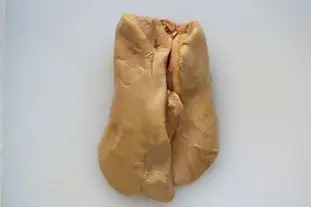
De-veining:
Take the liver out of the fridge at least two hours beforehand, so it will be at room temperature and soft.Rinse it thoroughly under warm water to eliminate any remaining traces of blood, then dry it with absorbant paper.
Stage 2
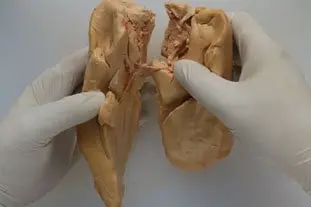
Pull the two lobes apart gently.
Stage 3 - 20 min.
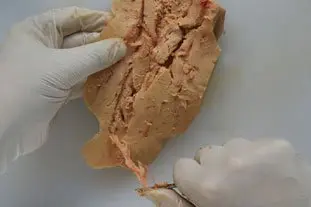
Pull the veins carefully towards you and remove them, without breaking or cutting, by passing your fingers underneath and following them right to the end.
This is the first tricky stage of the recipe. Your hands will get very greasy (to be expected with a foie gras, you might say), and you should not leave any veins, or as few as possible.
This is the first tricky stage of the recipe. Your hands will get very greasy (to be expected with a foie gras, you might say), and you should not leave any veins, or as few as possible.
Stage 4 - 1 min.
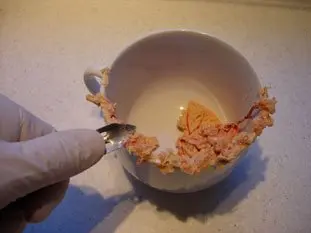
You might feel more comfortable working in fine rubber (surgical) gloves.
I recommend using a vegetable peeler as the point does the job quite well.
Another tip: have a bowl or a large cup in front of you and scrape the sticky veins off the blade into this as you work.
I recommend using a vegetable peeler as the point does the job quite well.
Another tip: have a bowl or a large cup in front of you and scrape the sticky veins off the blade into this as you work.
Stage 5 - 1 min.
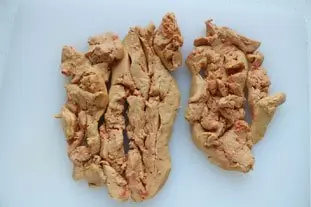
Once done, don't worry about the forlorn look of the liver, it's past caring!
Stage 6 - 30 min.
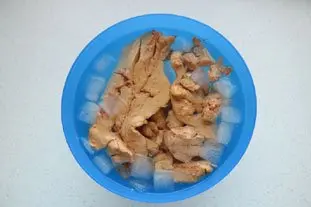
To remove any traces of blood, put the liver in cold water with a tablepoonful of coarse salt and some ice cubes added, for half an hour.
Then rinse the liver under running cold water and dry on absorbant paper.
Then rinse the liver under running cold water and dry on absorbant paper.
Stage 7 - 1 min.
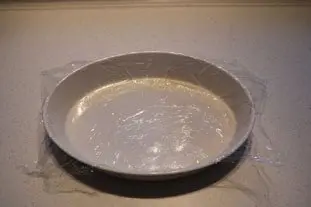
Line a wide oven-proof (gratin) dish with cooking-grade plastic film.
This is not essential, it just makes cleaning the dish afterwards much easier.
This is not essential, it just makes cleaning the dish afterwards much easier.
Stage 8 - 2 min.
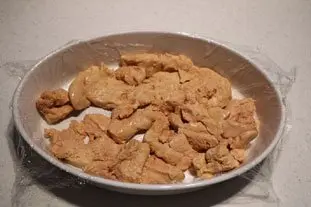
Spread the liver out in the dish in a single layer, as far as possible.
Stage 9 - 2 min.
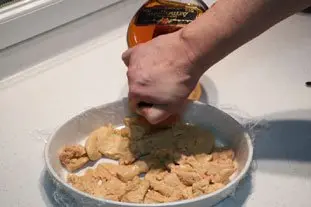
Seasoning:
Start by adding the alcohol. Trickle a few shlurps of Armagnac and Porto over the liver.You only need a little, otherwise the flavour of the booze will dominate over that of the liver, which is a shame.
Note: Prefer white alcohols instead of red ones, because red ones turn liver to grey when cooking.
Stage 10 - 4 min.
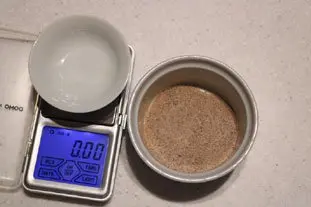
Weigh and mix the seasonings: salt, pepper, sugar and "quatre épices" spice blend (see below*). Do calculate these quantities carefully and respect the following proportions:7 g salt and 2 g pepper for 600 g liver.
The best way to do this is by using precise scales, but you can also measure them: 1 level teaspoon = 5 g of fine salt or 2.5 g of ground pepper (or near enough).
This is the second tricky stage of the recipe. It is important to use the right quantity of salt for the weight of liver. To help you, here is a little automatic calculator.
The best way to do this is by using precise scales, but you can also measure them: 1 level teaspoon = 5 g of fine salt or 2.5 g of ground pepper (or near enough).
This is the second tricky stage of the recipe. It is important to use the right quantity of salt for the weight of liver. To help you, here is a little automatic calculator.
Stage 11 - 2 min.
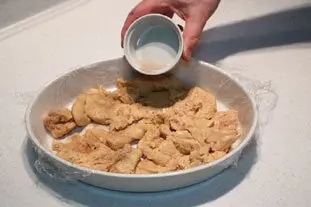
After weighing the correct amounts, mix the seasonings and scatter the mixture over the liver.
To spread them more evenly, scatter half, then turn the pieces of liver before adding the other half.
To spread them more evenly, scatter half, then turn the pieces of liver before adding the other half.
Stage 12 - 12 hours
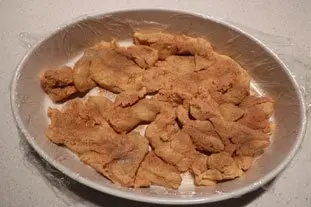
Cover the seasoned liver in its dish with a plastic film and refrigerate overnight.
Please note: the liver's maturing time in the fridge is important for the flavour. If you don't do this, it will still be good, but not quite as good as if left overnight.
Please note: the liver's maturing time in the fridge is important for the flavour. If you don't do this, it will still be good, but not quite as good as if left overnight.
Stage 13 - 2 hours
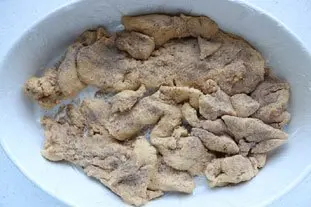
Next day, the liver is ready to be cooked. Take out of the fridge and remove the plastic film at least 2 hours before cooking.
Stage 14
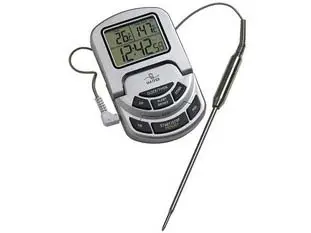
Cooking
It must be recognized, cooking is THE difficulty of preparing the liver, it must reach a certain temperature at heart, 158°F (70°C) for example, and this temperature must be reached gently, otherwise the liver melts and loses all its fat.I suggest 2 cooking methods, the classic bain-marie terrine cooking, called "De Françoise", and especially cooking called "flat" ":
Stage 15 - 40 min.
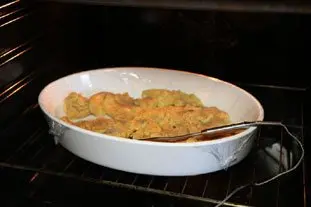
1) "Flat" cooking
Preheat the oven to 210°F (100°C), preferably without fan - quite unnecessary at such a low temperature.
Stick a thermometer into the thickest part of the liver and put in the oven.
If you'd like to keep the liver "pink", cook until the temperature reaches 122°F (50°C). For "mi-cuit" (just properly cooked, but not overdone), cook until it reaches 149°F (65°C).
If you don't have a thermometer, count 30 minutes cooking for "pink" and 45/50 minutes for "mi-cuit". Unfortunately, these times can only be approximate as your oven and the room temperature will have a marked effect on the cooking. In other words, as soon as you can, buy yourself a thermometer.
Preheat the oven to 210°F (100°C), preferably without fan - quite unnecessary at such a low temperature.
Stick a thermometer into the thickest part of the liver and put in the oven.
If you'd like to keep the liver "pink", cook until the temperature reaches 122°F (50°C). For "mi-cuit" (just properly cooked, but not overdone), cook until it reaches 149°F (65°C).
If you don't have a thermometer, count 30 minutes cooking for "pink" and 45/50 minutes for "mi-cuit". Unfortunately, these times can only be approximate as your oven and the room temperature will have a marked effect on the cooking. In other words, as soon as you can, buy yourself a thermometer.
Stage 16
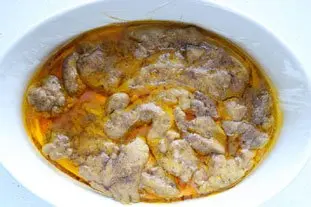
After cooking, the liver looks unattractive swimming in its fat and cooking juices, but don't worry, this is perfectly normal.
Stage 17
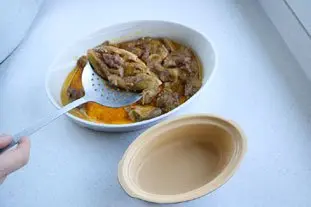
Now it's time to pack the terrine with the pieces of liver.
Use a skimmer to fish the pieces of liver out of the dish, drain them...
Use a skimmer to fish the pieces of liver out of the dish, drain them...
Stage 18 - 5 min.
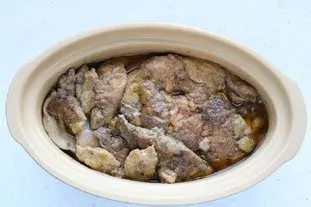
...and transfer to the terrine.
If you intend turning out the terrine later, choose the best-looking and largest pieces first to go in the bottom and finish up with the smaller ones (as in the photo).
If you intend turning out the terrine later, choose the best-looking and largest pieces first to go in the bottom and finish up with the smaller ones (as in the photo).
Stage 19
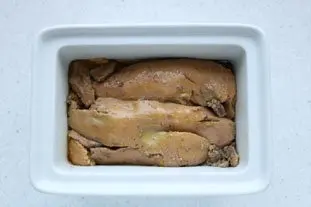
If, on the other hand, you will be serving the terrine straight from the dish, save the best pieces until last (like in this photo).
This cooking method, inspired by chef Eric Leautey, is very efficient as the centre of the liver gets up to temperature more rapidly when it is in a thin layer. This is the method I use for years.
This cooking method, inspired by chef Eric Leautey, is very efficient as the centre of the liver gets up to temperature more rapidly when it is in a thin layer. This is the method I use for years.
Stage 20
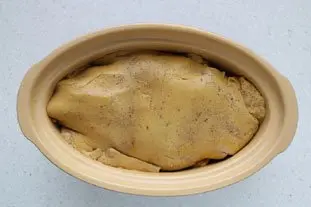
2) "De Françoise"
Preheat the oven to 300°F (150°C).
Roughly reconstitute the liver in the terrine, placing the pieces on top of each other.
Preheat the oven to 300°F (150°C).
Roughly reconstitute the liver in the terrine, placing the pieces on top of each other.
Stage 21
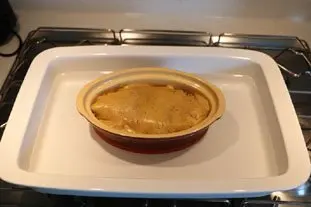
Place the terrine in a baking dish that you fill 3/4 of boiling water.
Stage 22
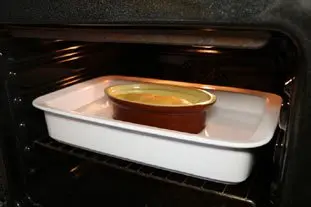
Put the dish in the oven and let the liver cook for 50 minutes uncovered, checking regularly with a thermometer that the water temperature is 158 ° F (70 ° C):
- If the temperature rises too much add half a glass of cold water
- If it goes down too much increase the temperature of the oven a little and pour a little boiling water in the dish (it is good to have a small pot of water on the fire handy throughout cooking).
- If the temperature rises too much add half a glass of cold water
- If it goes down too much increase the temperature of the oven a little and pour a little boiling water in the dish (it is good to have a small pot of water on the fire handy throughout cooking).
Stage 23
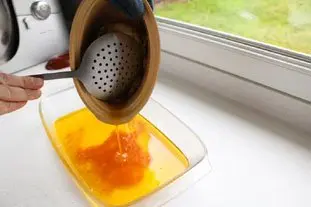
At the end of this time, remove the terrine from the oven and pour the liquids contained (fat and cooking juices) into a container, retaining the liver with a skimmer.
Your "De Françoise" terrine cooking is finished.
Your "De Françoise" terrine cooking is finished.
Stage 24
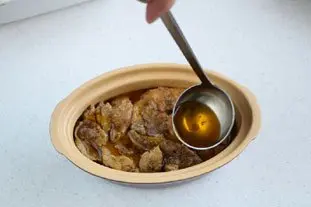
Finish the terrine by pouring over a little of the molten fat from the cooking dish.
Stage 25
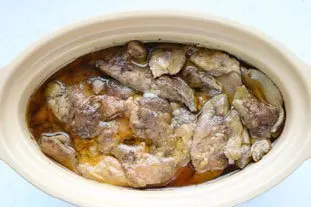
This is not just an attractive finishing touch; once set, it will help the terrine keep better.
Stage 26
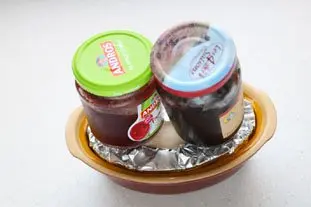
The final stage is to compact the terrine a little. I use a block of polystyrene cut to fit the shape of the dish (but a piece of thick cardboard would do just as well), covered with aluminium foil. I place this on top of the contents of the terrine and stand two jars of jam on top. The weight of the full jars is enough to press the terrine.
Leave to cool for 2 hours at room temperature, then refigerate.
Leave to cool for 2 hours at room temperature, then refigerate.
Stage 27 - 4 days
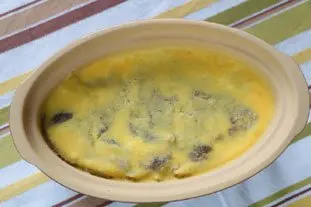
The "press" contraption can be removed after a couple of hours in the fridge.
Your terrine should be left for at least 4 days in the fridge before eating, to give time for the flavour to mature fully.
Your terrine should be left for at least 4 days in the fridge before eating, to give time for the flavour to mature fully.
Stage 28
The service
Serve your foie gras either by removing the terrine from the mold (immerse the bottom for a few seconds in hot water to facilitate demoulding) and turning it over on a serving dish to cut slices, as on this photo.Or, without removing it from the mold, by cutting slices in the bowl directly to the taste of the guests.
In all cases, take the bowl out of the fridge 10 minutes before serving , so that it is not too cold during the tasting.
Remarks
If you want a more natural taste, more pure foie gras, you can reduce the alcohol in this recipe to just one tablespoonful (or omit).
Again on the subject of alcohol, there is no need to be strict on the type or their number. Cognac and Armagnac are much the same (for the purposes of this recipe, at least); the same goes for sherry and port, or other fortified wines like Marsala, Maury, Madeira, etc.
For bread which goes best with foie gras, resist the temptation to use sliced industrial bread, or even worse brioche or other rich sweet bread (too soft, too sweet, too similar to foie gras). Better to use a more acidic, rustic bread like a classic "pain de campagne". For me, the best of all will always be a leaven-raised bread.
If you are worried about tackling this recipe, you can start with the easier method in terrine of foie gras.
If, like me, you are a foie gras aficionado but have a problem with the tradition of force-feeding geese, there is a glimmer of hope: check this out.
*In France, a blend of spices is sold as "quatre épices". You can make your own by mixing ground pepper, nutmeg, cloves and cinnamon.
Again on the subject of alcohol, there is no need to be strict on the type or their number. Cognac and Armagnac are much the same (for the purposes of this recipe, at least); the same goes for sherry and port, or other fortified wines like Marsala, Maury, Madeira, etc.
For bread which goes best with foie gras, resist the temptation to use sliced industrial bread, or even worse brioche or other rich sweet bread (too soft, too sweet, too similar to foie gras). Better to use a more acidic, rustic bread like a classic "pain de campagne". For me, the best of all will always be a leaven-raised bread.
If you are worried about tackling this recipe, you can start with the easier method in terrine of foie gras.
If, like me, you are a foie gras aficionado but have a problem with the tradition of force-feeding geese, there is a glimmer of hope: check this out.
*In France, a blend of spices is sold as "quatre épices". You can make your own by mixing ground pepper, nutmeg, cloves and cinnamon.
And to drink?

One can discuss at length what wine to drink with foie gras but, at the risk of being controversial, I don't think a Sauternes goes at all well. Such a sweet wine is already too close to the sweet richness of the foie gras.
I suggest you try a dry white wine instead, which can bring out the flavour of the foie gras by contrasting with it. Why not a "Cotes du Jura blanc" (those from the Domaine Rolet in Arbois (France) are excellent).
If you really prefer a sweet wine, try something less sweet than a Sauternes, like "Coteaux du Layon, Croix blanche" a wine from the Loire valley, (those made by Sylvie Termeau at Rochefort/Loire are perfect).
I suggest you try a dry white wine instead, which can bring out the flavour of the foie gras by contrasting with it. Why not a "Cotes du Jura blanc" (those from the Domaine Rolet in Arbois (France) are excellent).
If you really prefer a sweet wine, try something less sweet than a Sauternes, like "Coteaux du Layon, Croix blanche" a wine from the Loire valley, (those made by Sylvie Termeau at Rochefort/Loire are perfect).
Keeping
Several weeks in the fridge, covered with plastic film.
Source
From Françoise who taught me everything.
Nutritional information
| Whole recipe | |||
|---|---|---|---|
| Energetic value | Proteins | Carbohydrates | Fats |
| 2,375 Kcal or 9,944 Kj | 60 gr | 23 gr | 226 gr |
| 119 % | 23 % | 2 % | 34 % |
| Per 100 g | |||
|---|---|---|---|
| Energetic value | Proteins | Carbohydrates | Fats |
| 454 Kcal or 1,901 Kj | 11 gr | 4 gr | 43 gr |
| 23 % | 4 % | <1 % | 7 % |
| Per foie gras | |||
|---|---|---|---|
| Energetic value | Proteins | Carbohydrates | Fats |
| 2,375 Kcal or 9,944 Kj | 60 gr | 23 gr | 226 gr |
| 119 % | 23 % | 2 % | 34 % |
How much will it cost?
- For 1 foie gras : 17.76 €
Note: Be careful, these prices are only an estimate, you can consult the table of prices by ingredients used for this estimate.
Some recipes that use this recipe
Duck Parmentier
This recipe is very simple to make as everything can be prepared in advance. A layer of duck meat is sandwiched between two layers of potato purée. This is topped with grated cheese before being put in the oven.
99K3.9 51 min.
Foie gras fingers
An elegant canapé which consists of a crisp layer of shortcrust pastry topped with a layer of foie gras.
127K4.6 2 hours 50 min.
Sarladaise potatoes
Potatoes fried in a little goose fat, with a mixture of chopped parsley, garlic and shallot added just before serving. Greedy folks (like me) melt a few thin slices of foie gras over the top.
234K4.7 1 hour 25 min.
Beef Wellington
Beef Wellington consists of a beef fillet (or tenderloin) that is first seared, then cooked in the oven in a puff pastry crust stuffed with a mushroom duxelles and morsels of foie gras. The recipe is rather long, but fairly straightfoward. Here I show you all the tips to help you make it sucessfully...
109K5 1 hour 38 min.

Scallops with crunchy vegetables and wine sabayon
This is a bed of vegetables cut small, lightly cooked to stay crunchy. The scallops are cut in half and fried, filled with a morsel of foie gras, and served coated with a savoury reduced white wine sabayon. It entails some work, but the result is impresive.
299K4 2 hours 56 min.
This recipe uses (among others)
 | Fine (or table) salt: You can get more informations, or check-out other recipes which use it, for example: Mixed tomato salad, Cherry tomato and green bean salad, Chocolate mousse with hazelnuts, Yeast-based flaky dough (for croissants), Leek and potato soup, ... All |
 | Brandy (Cognac or Armagnac): You can check-out other recipes which use it, like for example: Rabbit terrine, Rabbit terrine, Lobster Thermidor, Chilli langoustines, Pâté de campagne, ... All |
 | Caster sugar: You can get more informations, or check-out other recipes which use it, for example: Citrus syrup, Strawberry Charlotte, Lemon and lime custard tart, Almond macaroon cake, Pistachio powder or paste, ... All |
 | Port: You can check-out other recipes which use it, like for example: Melon with port sorbet, Melon with port sorbet, Foie gras cured in salt, Lobster Thermidor, Pâté de campagne, ... All |
Other recipes you may also like
Macarons (the original French macaroons)
This recipe really is "of the moment": the success of these small, highly-coloured cakes, in an infinite variety of flavours, is impressive. It's a recipe which needs some care, in order to produce a result worthy of a professional pastrychef. No problem, I will guide you through the recipe,...1.6M 714.6 2 hours 38 min. October 3rd 2019
Tartiflette
A personal version of a classic recipe from Savoy.585K 14.6 1 hour 27 min. September 16th 2019
Foie gras cured in salt
This a quite different preparation from the terrine of foie gras, this time it does not go in the oven, the liver is salted for 48 hours and it "cooks" (or cures) in this way.552K5 2 days 16 hours 28 min. December 23th 2017
Pâté de campagne
Here is a personal version of the famous country pâté. It's an interesting recipe to prepare in large quantities because it keeps well and freezes easily. The secret of a good pâté is of course the ingredients, but also how it is cooked.2.0M 23.7 7 hours 54 min. October 3rd 2019
Grilled fillet of salmon with corn-salad cream
A salmon fillet, grilled slowly to keep the inside tender, served with sesame rice and a little corn salad cream. You'll love it...260K 13.9 1 hour 14 min. October 13th 2010
News list of cooking-ez.com
Sign up to receive the latest recipes (next batch due to be sent on 2024-05-12)
Note: We'll never share your e-mail address with anyone else.
Follow this recipe (as 61 people already do)
If you are interested in this recipe, you can "follow" it, by entering your email address here. You will then receive a notification immediately each time the recipe is modified or a new comment is added. Please note that you will need to confirm this following.
Note: We'll never share your e-mail address with anyone else.
Alternatively: you can subscribe to the mailing list of cooling-ez.com , you will receive a e-mail for each new recipe published on the site.
Instead use a smaller container, a jar for example.