Glossary (talk like a chef)
You have probably noticed that many recipes given by chefs are full of incomprehensible jargon. This is because chefs have their own "language".
Here is a small glossary of words and expressions that you are likely to find in recipes.
Here is a small glossary of words and expressions that you are likely to find in recipes.
732K 14
Last modified on: August 11th 2023
Words
-
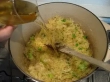 Add liquid : Adding a liquid.
 -
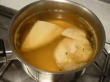 Base : Concentrated stock of various meats, vegetables and spices usually used as a base for sauces. There are several kinds of "fond" (white=poultry, brown=beef and veal fond).
 -
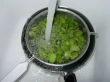 Blanch : Blanching. Plunging an ingredient (usually vegetables) into boiling salted water for a very short time (a few seconds), and then into very cold water.
 -
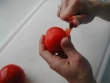 Blanch (almonds etc.) : For almonds (or other nuts), blanching is the process of plunging in boiling water in order to remove the skins easily.
 -
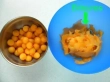 Broken pieces or crumbs : Remaining parts of a product, after cutting, which are edible but not very attractive.
 -
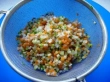 Brunoise (tiny diced vegetables as garnish) : Cutting a product into very small dice.
 -
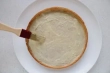 Chablonnage (sealing pastry with chocolate) : Chablonnage is a French pâtisserie term which means sealing the inside of a pastry tart case with a thin coating of melted white or dark chocolate, normally applied with a brush. After cooling, the c...
 -
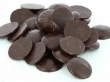 Chocolate drops (pistoles) : Chefs like to use chocolate in the form of regular-sized round "drops", weighing a couple of grams. The French term "pistole" probably arose by analogy with the 16th century gold coin of the same nam...
 -
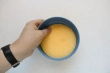 Clarify : Removing the solids from a mixture to obtain a clear liquid. To clarify.
 -
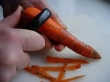 Clean (trim) : Cleaning, removing scraps (inedible parts).
 -
 Cover/wrap with plastic film : Covering with a plastic film to protect from air.
 -
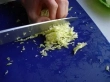 Cut or snip : Cut in fairly thin slices or strips.
 -
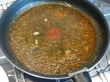 Deglaze : Deglazing. Pouring a little liquid into a pan where cooking has left a deposit on the bottom, then scraping to free all the juices and mix them with the liquid.
 -
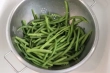 Drain : Refers to food or a preparation from which you want to remove the liquid part, such as the cooking water.
 -
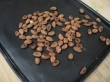 Dry roasting : Dry roasting (torréfication in French), usually seeds (sesame, linseed,...) or nuts (almonds, walnuts, ...), means to heat without water or fat, in the oven or a heavy pan, to drive off all water the...
 -
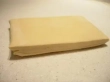 Feuilletage : Piece of puff pastry.
 -
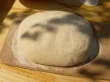 Flour : Dusting, dredging or sprinkling, usually with flour.
 -
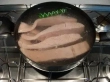 Fumet : Similar to a "fond" (concentrated stock), but made from fish.
 -
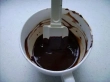 Ganache : A mixture of melted chocolate with cream or milk, which allows it to keep a soft consitency which doesn't set on cooling.
 -
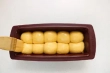 Glaze :
 -
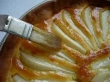 Glaze (with apricot jelly) : Glazing a tart or cake with a little apricot jelly (using a brush) to make it glossy and appetising.
 -
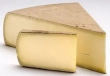 Ingredient, product : Everything used as a raw material in the kitchen: vegetables, meat, fish, spices, fruit, etc.
 -
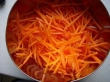 Julienne : Cutting an ingredient into small sticks. In French it's also the name of a sea fish (ling).
 -
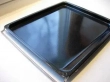 Lèchefrite (oven tray) : Large rectangular metal oven tray sold with cooker
 -
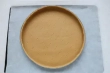 Line (with pastry) : Lining a tart mould or tin with a circle of pastry.
 -
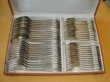 Ménagère : Housewife. The term, unfortunately condescending and rather pejorative, used by chefs to refer to someone who cooks at home and is therefore not a professional chef. In France, a "Ménagère" it's al...
 -
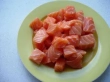 Mirepoix (diced vgetables) : Cutting a product into dice.
 -
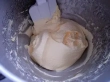 Mixture or batter : Preparation with several ingredients.
 -
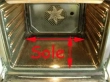 Oven floor or sole : Word meaning the floor or bottom of your oven.
 -
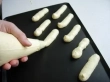 Piping : Piping is a way of applying or shaping a preparation with a forcing (or piping) bag. It is the best way to distribute a mixture evenly and form regular shapes as it emerges from the nozzle.
 -
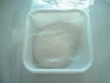 Pointage (starting) : In bakery, "pointage" (starting), it's the first resting period, just after kneading.
The dough, in one piece, is put for resting in a bowl, at ambient temperature, covered to prevent from making cru...
Pointage (starting) : In bakery, "pointage" (starting), it's the first resting period, just after kneading.
The dough, in one piece, is put for resting in a bowl, at ambient temperature, covered to prevent from making cru... -
 Poolish : Poolish is a fermented batter, generally a mixture of water, flour and yeast which acts as the leaven for certain kinds of bread dough.There are distinct bread types, depending on the rising agent: ye...
 -
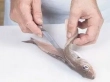 Rise (or prove) : Removing for use the best part of a fish, poultry, etc.
 -
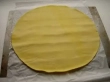 Rolled-out pastry : Pastry that has been rolled out with a rolling pin, usually in a circle.
 -
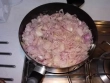 Round slice of onion : Slice of something with round shape.
 -
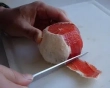 Scraps (inedible parts) : Scraps, inedible parts. Applies to vegetables, fruit (skins, core, ...), meat (bones, veins, skin, ...) and fish (heads, skin, bones...).
 -
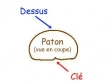 Seam : The seam. On a formed loaf prior to baking, the underside where the edges of the dough have been rolled towards the centre.
 -
 Set aside : Set aside or put away.
 -
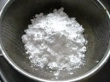 Sieving : To sieve means to pass a powder through a strainer with a fairly close mesh, to ensure that there is only a fine powder and no bits or lumps.
 -
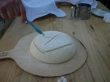 Slash : Slashing is a baker gesture, which means that cuts are made on top of loaves, with a very sharp blade, at baking time.
 -
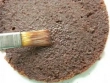 Soaking a cake : Soaking (or drizzling) is adding liquid to a cake after cooking, usually a syrup or alcohol, to make it less dry.
 -
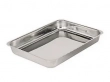 Transfer : Sometimes we need to transfer the contents of a pan to a dish or plate. This is often to rapidly stop something cooking, as the dish it is transferred to will always be cooler, or it might simply be ...
 -
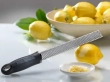 Zesting : "Zesting" / "to zest" means to take off the zest, the thin outer layer of peel on citrus fruit (lemon, orange, grapefruit, etc.), to add the fruit's flavour with a hint of bitterness to a mixture. Th...
Expressions
-
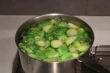 À l'anglaise (English style) : French cooking term, said of a cooking, rather of vegetables, which is done in a large volume of boiling salted water.
 -
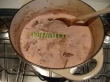 Add liquid to cover : Filling a receptacle with liquid, until the contents are just covered.
 -
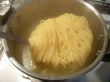 Al dente : "Al dente" ("at the tooth" in italian) is a term that mean: the optimum cooking pasta.
 -
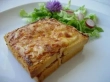 Arrange on plate : Serving up a dish on a plate which will go directly onto the table in front of your guests. To arrange on the plate.
 -
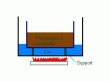 Bain-marie : Method of gently heating something over hot water without direct contact with heat.
 -
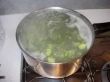 Boil in water : Cooking in a large pan of salted water. English way of cooking.
 -
 Checking seasoning : Tasting to see if the preparation has enough salt and pepper.
 -
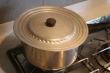 Covered : Said of cooking with a lid.
 -
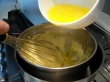 Finish sauce (with butter) : Adding cold butter to a hot liquid a little at a time, while beating with a whip to make a smooth sauce.
 -
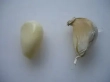 Garlic "en chemise" : Said of garlic cloves which are used without being peeled ("in its shirt" in French). In the photo, the left hand clove is peeled as normal, the right hand one is "en chemise".
 -
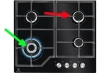 Off the heat : To "take off the heat" means to take a pan off the hob and stop it heating any further in order to bring down the temperature of the contents rapidly, usually to stop the cooking.
 -
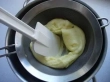 Passing through a sieve : To push a fairly thick preparation through a"sieve", usually with a maryse, thus removing any remaining lumps. The aim is to produce something totally smooth in texture.
 -
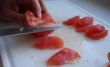 Peel fruit completely : Removing all skin, seeds, pith, etc. of a fruit, to keep only flesh.
 -
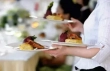 Plated up ('à l'assiette') : A dish that is served to each guest in individual portions on a plate, rather than one that is placed in the center of the table.
 -
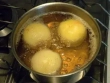 Poaching : Poaching is a way of cooking food (usually slowly) by lowering into a hot liquid: water, vegetable stock or syrup, for example. This gentle method of cooking allows the food to retain all its flavour...
 -
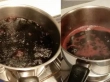 Reduce : Reducing. Leaving a liquid on the heat until it reduces in volume by evaporation, to the desired quantity.
 -
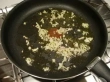 Sweat in butter : Cooking vegetables briefly in a little butter until they become slightly transparent.
 -
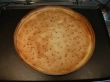 To bake blind : To bake pastry "blind" means to cook it on its own or as an empty tart case, when it will be assembled with or have a filling that will not go in the oven.
 -
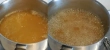 To simmer : "Simmering" is used for a liquid that just start to boil, not rolling boil (left photo). The opposite of "simmering" is "rolling boil" (right photo).
 -
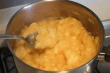 Uncovered : Said of cooking without a lid.
 -
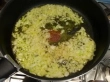 Without colouring : Removing something cooking from heat, just before it begins to brown.
The second could be "Matignon", it's a mix of vegetables cutted in small dices, and cooked in olive oil.